


Latest news

This weekly report covers several important developments: a GAO report shows an increase in the proportion of students with disabilities integrated into regular classrooms; a Johns Hopkins University study finds that only 13% of schools returned to pre-pandemic absenteeism levels in the 2024-25 school year; bipartisan governors call for local-led education solutions; four states enact new laws requiring AI usage policies; a federal bill to cut benefits may affect free school meal eligibility; the Department of Education proposes to rescind regulations for the Equity Assistance Centers; the Supreme Court has made or is pending rulings on transgender athletes and admissions policies.

K-12 Dive launched the Study Hall series in 2024, aiming to clarify key issues affecting schools for education leaders. The series offers one-stop information in an 'explainer' format, covering a wide range of topics from federal civil rights law to differences among various school models. This article compiles the published installments and opens a channel for reader suggestions.

A report released by Amplify based on mCLASS DIBELS test data shows that at the end of the 2025-26 school year, reading readiness among students in grades K-2 has shown almost no improvement compared to the previous year, with national composite scores indicating that 66% of students are on track and 34% are below benchmark. This marks the first time since the 2020-21 school year that there has been no annual growth. The report recommends implementing a multi-tiered system of supports and strengthening teacher training in the science of reading.
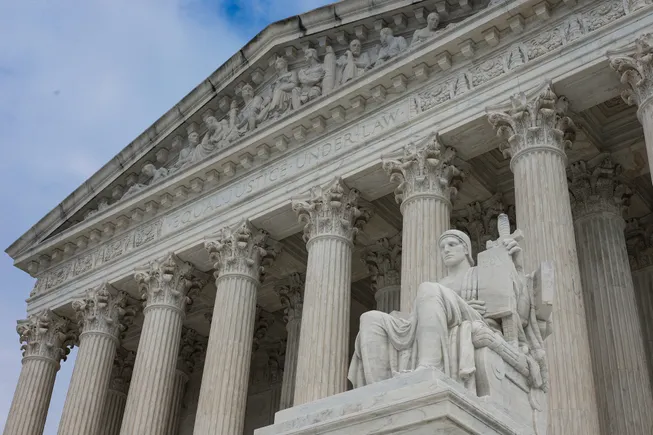
This week's review focuses on the U.S. Supreme Court's landmark ruling regarding transgender students' participation in sports, as well as ETS's acquisition of ACT. Additionally, the Department of Education clarified misunderstandings about outsourcing special education services while facing a lawsuit over nearly $2 billion in withheld funds. In curriculum reform, Texas approved incorporating Bible stories into coursework, a middle school in North Carolina explored career-oriented education, and Stanford experts advised caution in advancing AI teaching applications.

Researchers from Harvard, Stanford, and Dartmouth found that D.C. public schools led the nation in English and math academic recovery between 2022 and 2025. Chancellor Lewis Ferebee explains: competitive pay to retain teachers, sustained investment in high-impact tutoring, early adoption of the science of reading, and an anonymous $20 million donation to accelerate math initiatives together form the engine of this recovery.

After a Texas law banning "harmful," "indecent," or "vulgar" content in school library collections took effect, the New Braunfels Independent School District temporarily closed its middle school libraries and used AI to review over 195,000 books. About 30 states nationwide have enacted similar policies, and school districts are turning to AI tools under compliance pressure, but free speech advocates worry that automated decision-making may intensify book censorship. This article analyzes the role of AI in book censorship, the controversies, and the dilemma facing school districts.

As the historic $189.5 billion in ESSER funds expire this month, education experts assess their impact and find mixed results: some regions achieved academic progress and facility improvements, but the overall return on investment is difficult to quantify, and some areas face fiscal challenges after the funding ends.

Professor Kara Ball points out that STEM education should not exist solely as an elite program but should be integrated into general classrooms through neuro-inclusive design. She shares her experience of using the $5 million award from the Bezos Courage and Civics Prize to support Understood.org in promoting inclusive STEM practices, and calls on school districts to invest in teacher support, choose inclusive materials, and build partnerships.


Employee political speech and activities may cause workplace conflicts, but private employers' handling authority is subject to multiple legal restrictions. This article outlines relevant legal standards and provides actionable balancing strategies for HR.